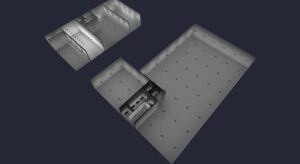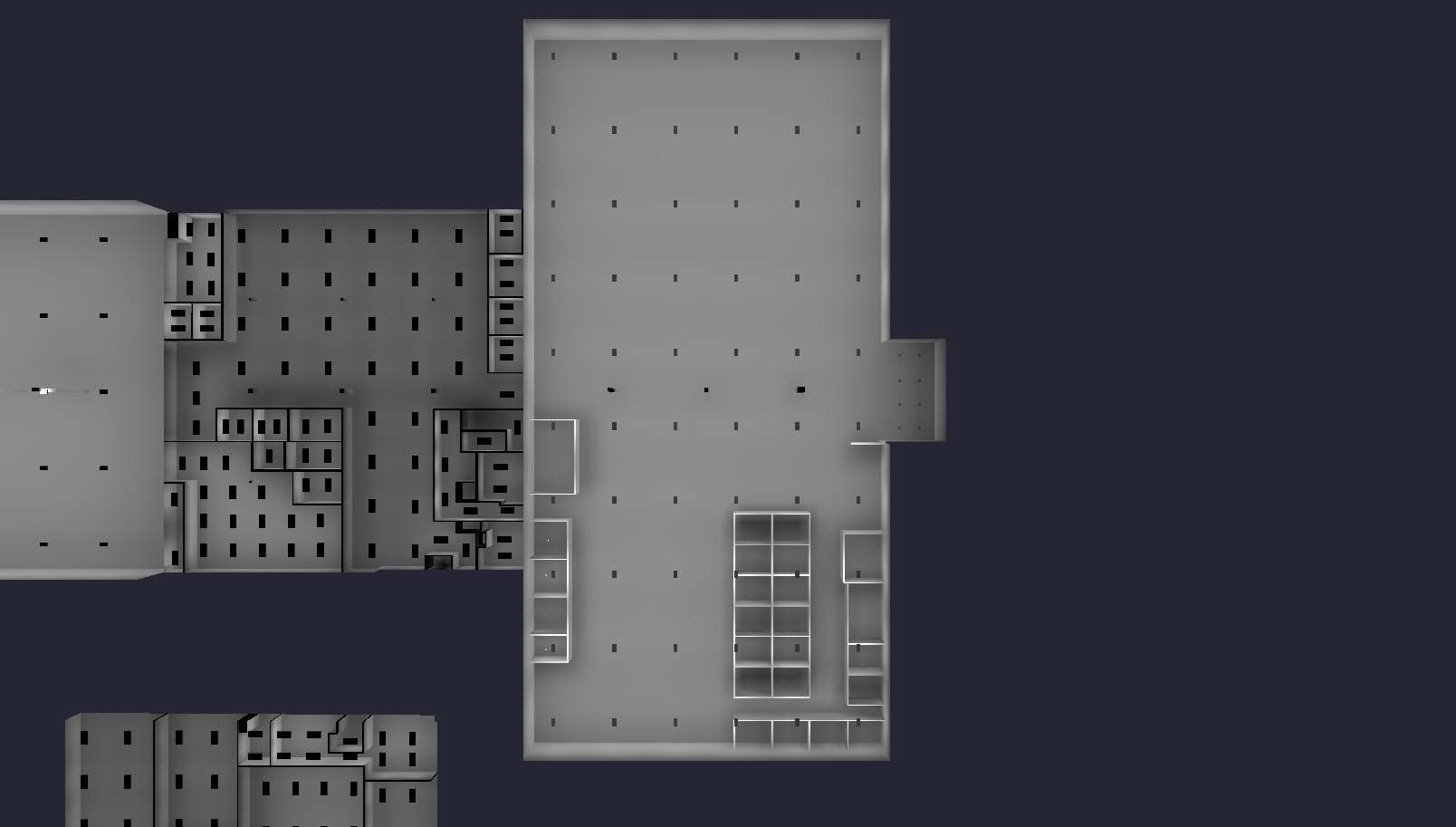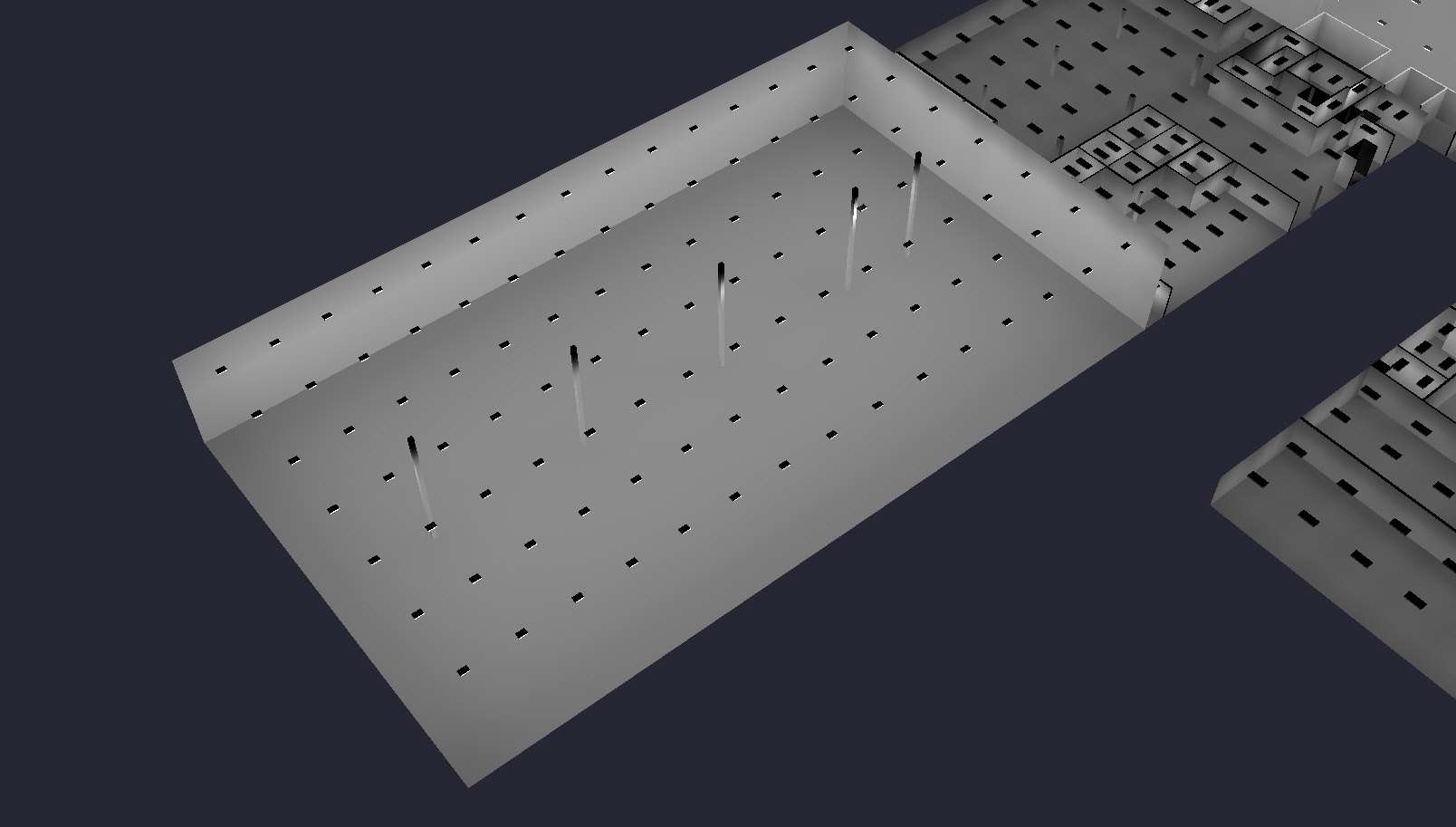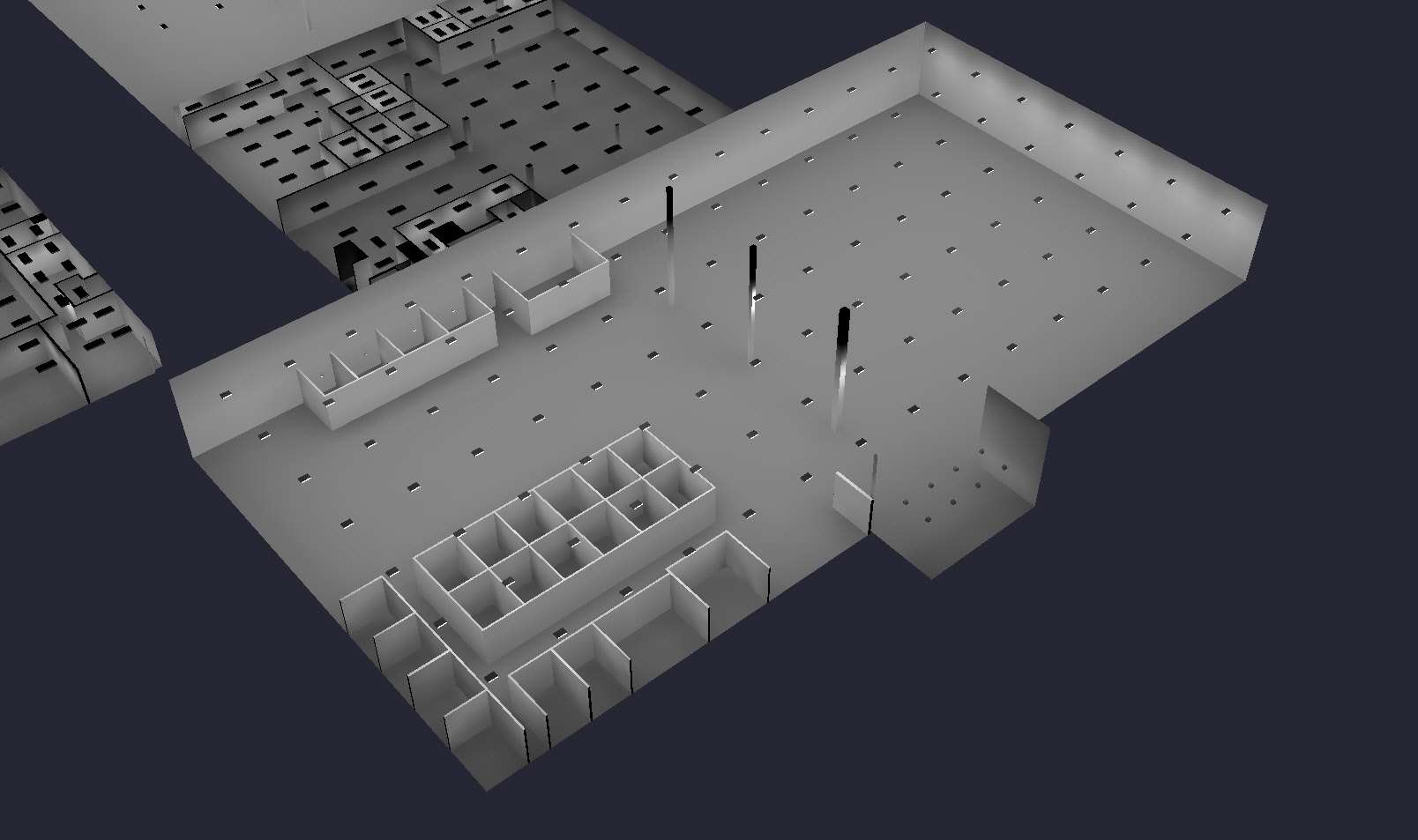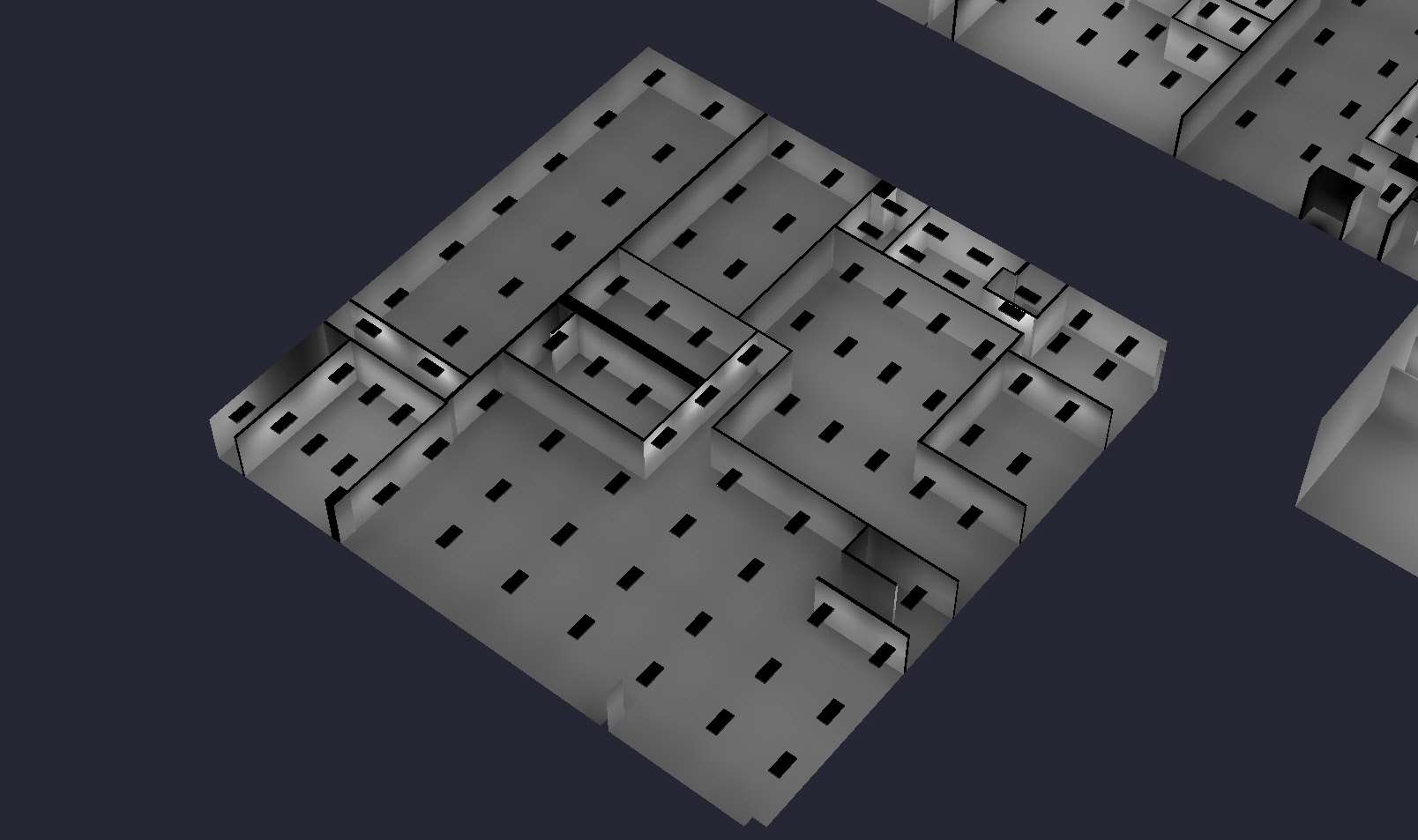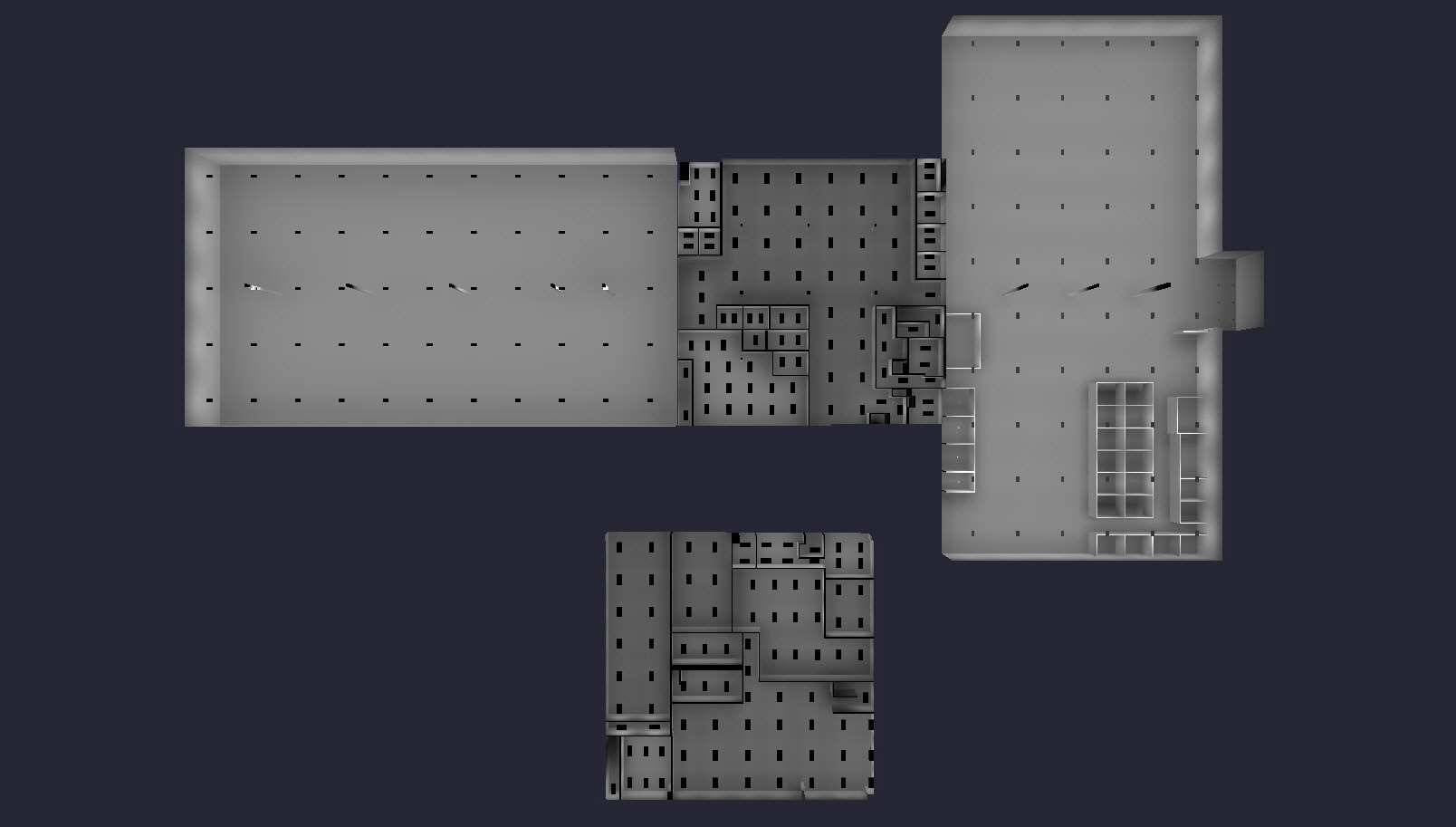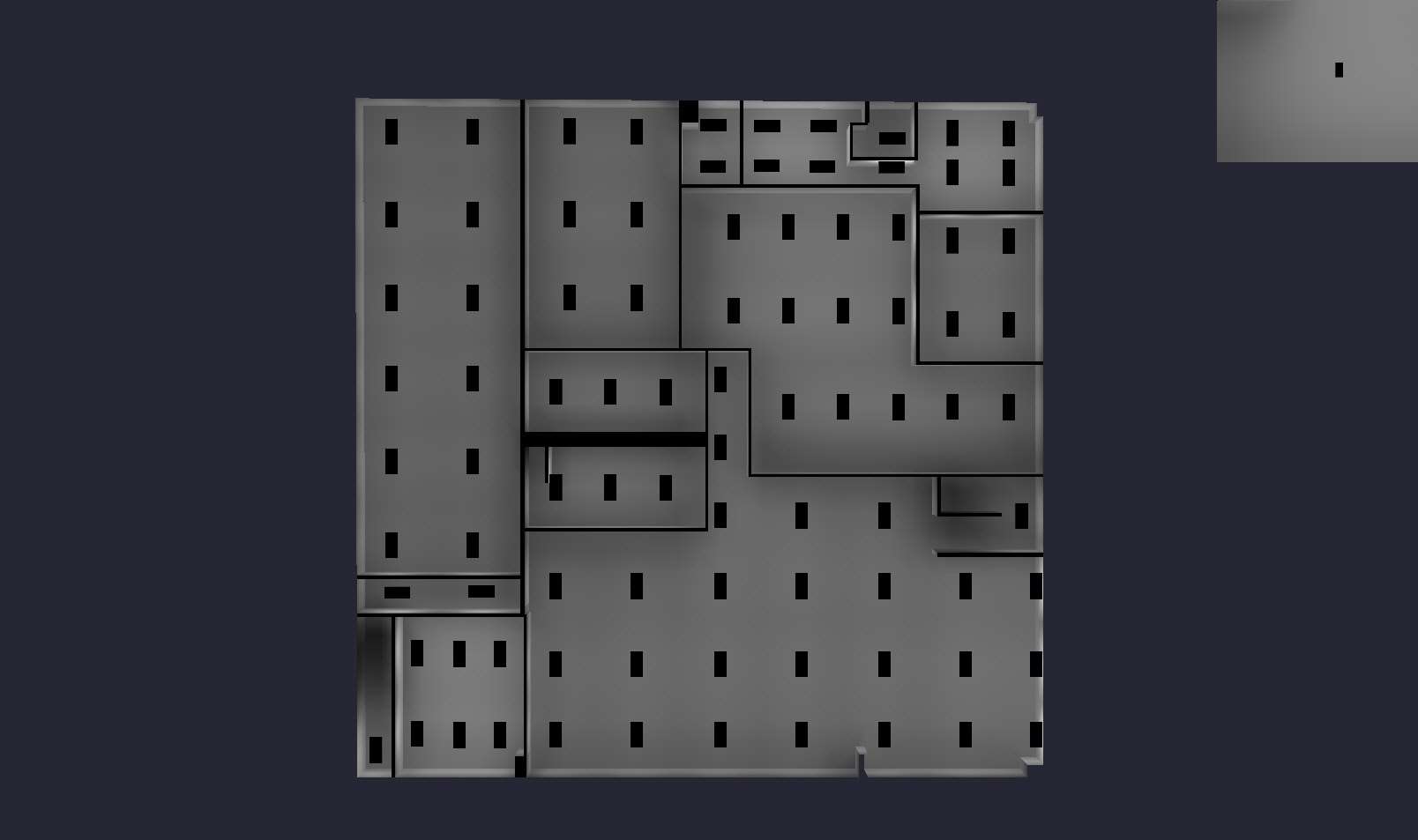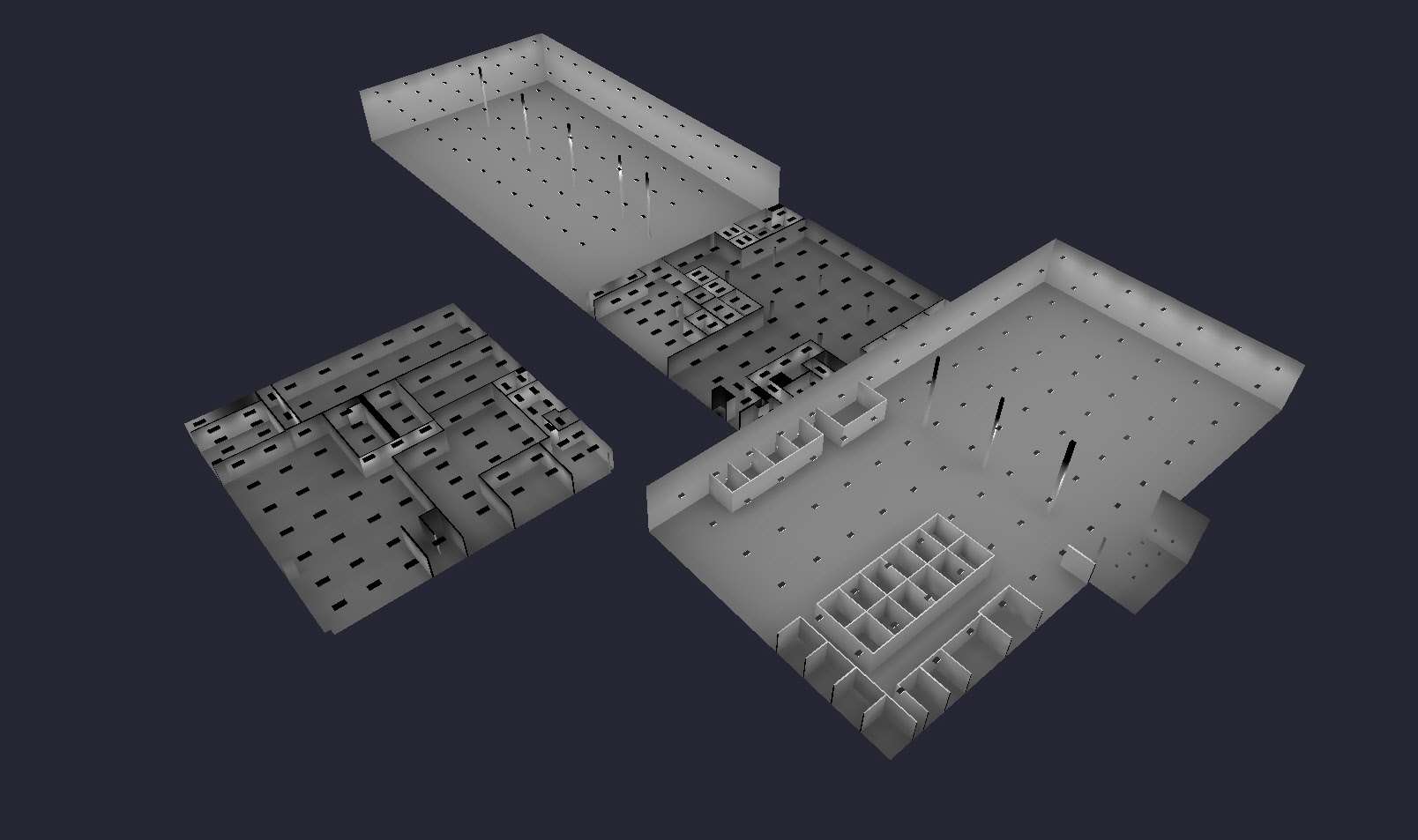
This project covers a full interior layout with multiple environments under one roof, including warehouse space, open sales areas, smaller sales rooms, and multi-floor office sections. Each area required a different lighting approach, both in fixture selection and target light levels.
Instead of forcing a single lighting standard across the building, the design breaks the space into zones and treats each one based on function.
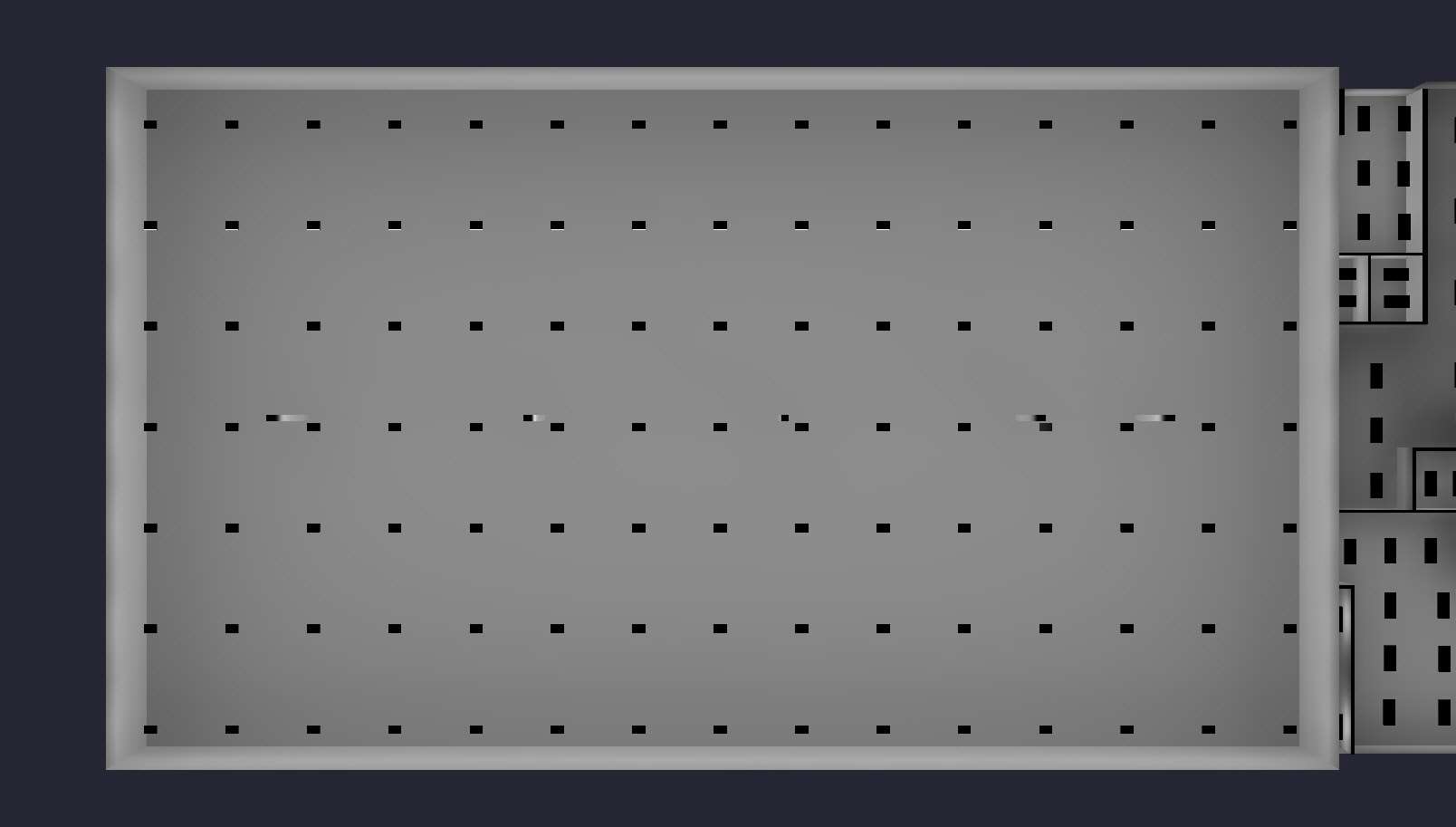
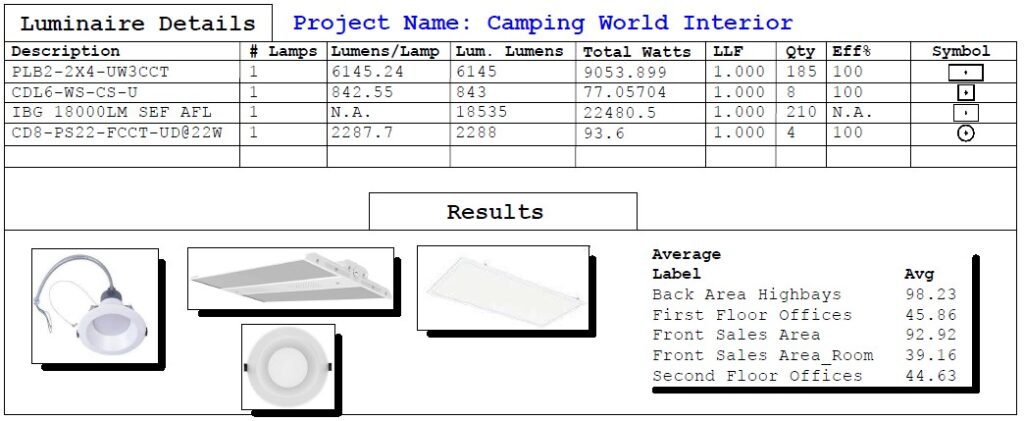
The warehouse section uses LED high bays with a target of ~100 foot-candles. This is intentionally on the higher end for a space like this, helping improve visibility around shelving, equipment, and product movement. The open layout allows for a clean grid pattern, similar to what you’d see in distribution centers or logistics facilities, keeping coverage consistent without overcomplicating spacing.
Moving into the main sales floor, lighting shifts to a brighter retail feel, averaging around 90+ foot-candles. This helps products stand out, improves visibility across large floor areas, and creates a more inviting environment for customers. It’s a noticeable step down from the warehouse intensity, but still bright enough to feel clean and professional.
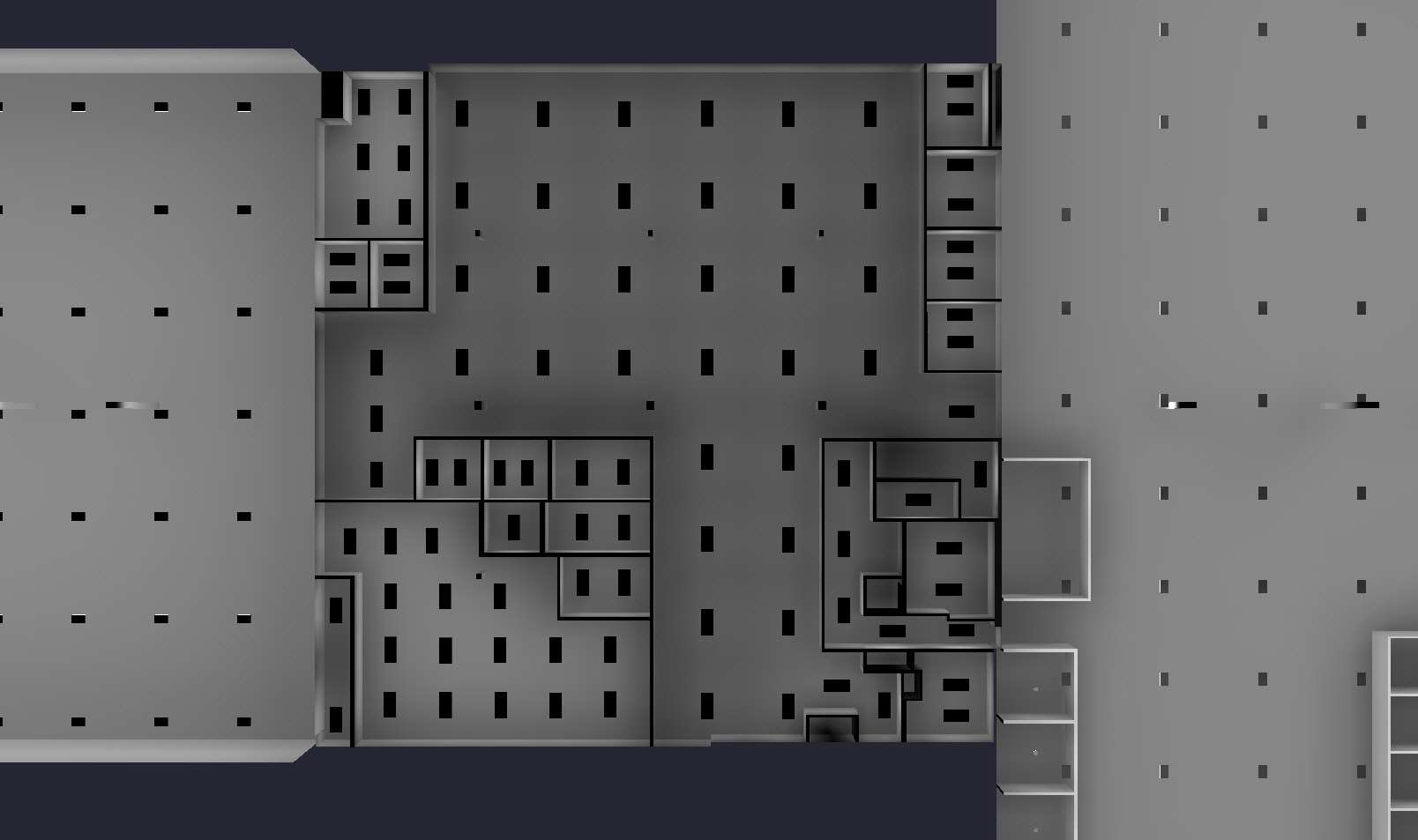
Some of the smaller sales rooms are intentionally dimmer, sitting closer to 40 foot-candles. This contrast works well in practice. It creates a more relaxed, focused atmosphere where customers can spend time without the harshness of a fully lit showroom. This kind of variation is common in modern retail lighting design and helps guide how people move through the space.
Office areas, both on the main floor and second level, are designed around ~45 foot-candles. This keeps things comfortable for long working hours while still providing enough light for screens, paperwork, and day-to-day tasks. Using flat panels and downlights here keeps the look clean and uniform.
Fixture selection plays a big role in tying everything together:
- LED high bays for warehouse coverage and high-output zones
- Flat panel fixtures for offices and general areas
- Downlights for tighter spaces and controlled lighting zones
This mix allows each area to perform properly without over-lighting or under-lighting the space.
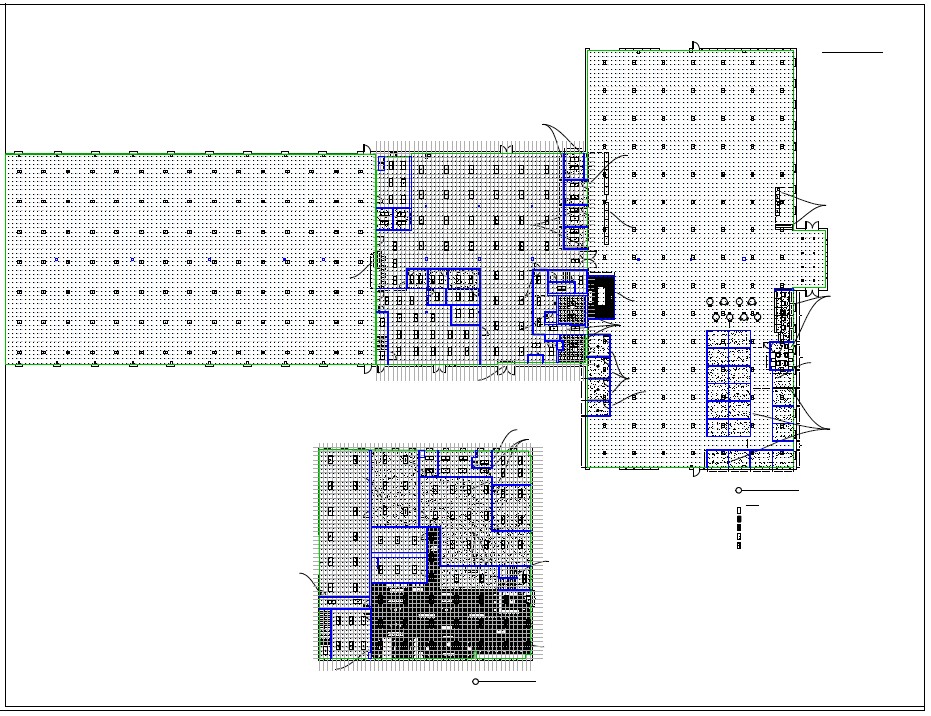
From an installation and design standpoint, this is a very common type of commercial project, but it’s also where a lot of systems go wrong. Treating everything the same usually leads to wasted energy, poor visibility, or uncomfortable spaces.
By zoning the building correctly and matching light levels to actual use, the result is:
- Better visibility where work is being done
- Improved customer experience in retail areas
- Comfortable lighting for office staff
- More efficient overall energy usage